How to Build a Startup Risk Map: A Founder's Guide to Seeing the Unknown
Every startup begins with optimism — a product to build, a market to serve, a team to grow. But underneath the excitement lives a quieter force that shapes every decision: risk. Most founders sense it but rarely map it. And what you can't see, you can't manage.
A risk map turns chaos into clarity. It's a simple yet powerful visual that shows where your biggest uncertainties lie, how severe they are, and what to do about them.
Step 1. Define What "Risk" Means for You
Risk = Probability × Impact
Probability: How likely is it that this will happen?
Impact: How much would it matter if it did?
In other words: What could go wrong, and how bad would it be?
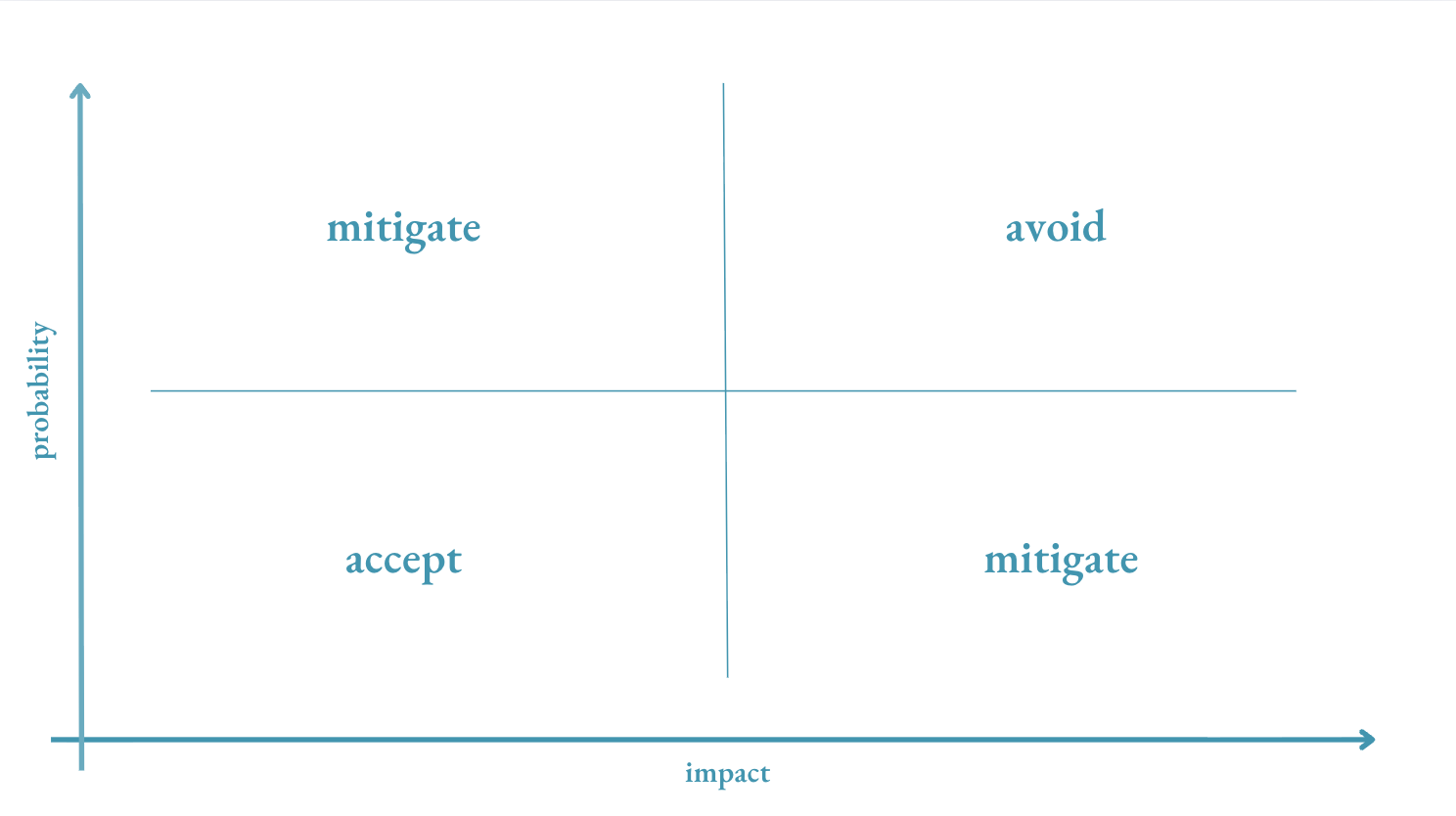
At foundwise, we use a simple 2×2 logic — from low to high on each axis — to categorize risks. This structure gives you four clear zones of attention:
Think of it as your founder radar.
Step 2. Identify Your Risks
Gather your team (or open a blank Miro board if you're solo). List every potential risk you can think of — no filtering yet.
Start with these categories:
- Market Risks – demand uncertainty, timing, competition.
- Product Risks – feasibility, quality, usability.
- Operational Risks – supply chain, vendor dependency, team burnout.
- Financial Risks – cash flow, funding gaps, cost overruns.
- Legal & Reputational Risks – compliance, negative publicity, brand missteps.
Prompt ChatGPT with:
"Act as a risk consultant for a [type of startup]. List 15 potential risks and group them by category."
You'll get a comprehensive starting list in seconds.
Step 3. Score Each Risk
For each risk, give two simple scores from 1 to 5:
- Probability (1 = unlikely, 5 = very likely)
- Impact (1 = minimal effect, 5 = critical threat)
Then multiply them:
Risk Score = Probability × Impact
The higher the score, the more attention it deserves.
This step converts anxiety into data — it tells you which problems are worth losing sleep over and which can wait.
Step 4. Place Them on Your Map
Open the FoundWise Miro Risk Map (link below).
Each sticky note represents one risk. Drag it into the quadrant that matches its score:
- Top-right = high probability, high impact → Avoid or redesign.
- Top-left = high probability, low impact → Mitigate or manage.
- Bottom-right = low probability, high impact → Prepare or transfer.
- Bottom-left = low probability, low impact → Accept and monitor.
Color-code them (e.g., red/orange/yellow/green) and add short tags for quick scanning — "Team," "Tech," "Finance," etc.
Step 5. Assign an Action Plan
For every high-priority risk (scores 12–25), answer three questions:
How can we prevent it?
How can we detect it early?
How will we respond if it happens?
Then assign ownership — one person or system responsible for monitoring that risk.
You can use:
- Notion / Airtable → to track risk owners and mitigation tasks.
- Slack reminders / Zapier automations → to schedule monthly risk reviews.
Step 6. Keep It Alive
A risk map is a living document — not a one-off exercise. Review it after every key milestone or crisis. Add new risks as your company grows. Remove old ones as they're resolved.
The goal isn't perfection — it's awareness.
The more you practice risk mapping, the more natural it becomes to make proactive, not reactive decisions.
Bonus: Use AI to Spot Blind Spots
When you've built your initial map, ask ChatGPT or Claude:
"Here's a list of my startup's current top 10 risks. What might I be missing?"
AI will often surface non-obvious things — cognitive bias, regulation shifts, supply dependencies, or founder health — that humans overlook.
Your Turn
We've built a free Miro template you can duplicate and start using today:
👉 Open the foundwise Startup Risk Map Template
You can also sign up for early access to the FoundWise Risk Simulator, our upcoming tool that quantifies your risk style as a founder and helps you balance intuition with data.
Final Thought
Successful founders don't avoid uncertainty; they manage it with eyes wide open.
The best founders don't avoid uncertainty; they manage it with eyes wide open.